

- 2
- 3
- 4


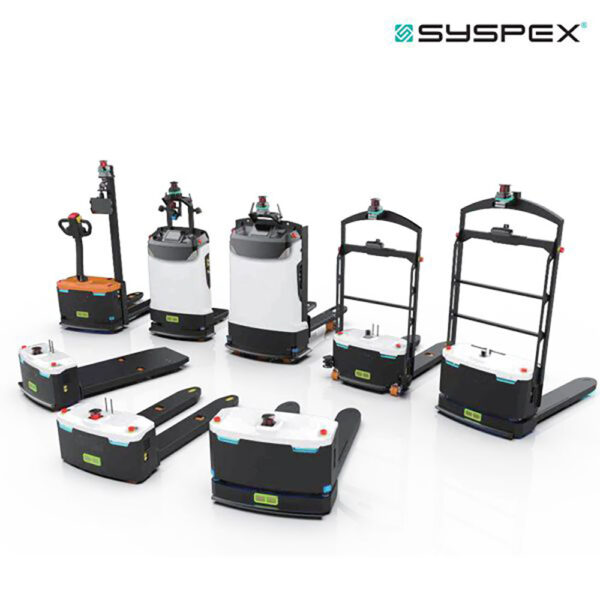


AGV and AMR Use Cases for Warehouse and Factory Operations
Different products require specific levels of deceleration and surface protection to survive the rigors of transit. For lightweight items, on-demand air cushioning provides a soft, air-filled barrier that blocks and braces products within the carton. For heavier or sharp-edged industrial components, paper cushioning systems create thick, shock-absorbent pads that offer superior structural support. When high-precision protection is needed for sensitive electronics or medical devices, cushioning foam and PU foam provide custom-contoured support that minimizes vibration and G-force impact.
Sustainable and Space-Saving Fulfillment
Modern fulfillment centers face the challenge of balancing high-level protection with warehouse space constraints. Syspex addresses this by providing on-demand air cushioning and paper bubble solutions that are created only when needed. Storing flat rolls of material instead of bulky pre-filled bubbles saves significant warehouse floor space. Additionally, switching to paper bubble offers a 100% recyclable and biodegradable alternative to traditional plastic wrap, helping your business reach green goals while maintaining the high-performance standards of professional protective packaging.
AGV vs AMR: Which System Fits Your Warehouse Layout and Throughput
- 30 Over Years of Industrial Experience With over three decades of work, we do more than sell materials. We provide full drop-test analysis and packaging design to ensure your products are fully protected.
- Consultative Engineering We perform on-site tests to find the exact “G-level” protection your product needs. This stops material over-use and saves costs by ensuring the correct density of PU foam or paper is applied.
- Regional In-House Technical Expertise Our own technical engineer team is located in Singapore, Malaysia, and Indonesia. This means we can provide fast maintenance and setup help for your paper cushioning systems whenever you need it.
- Sustainability Commitment We promote the use of FSC-certified paper and recyclable cushioning foam to help your business reduce its environmental footprint without compromising load safety.
How to Choose the Right AGV Solutions Provider
- Site survey: floor condition, aisle width, payload requirements, peak hours
- System design: matched to route stability, safety, WMS/ERP/MES integration, and future expansion
- Service readiness: spare parts, engineering support, escalation workflow
A reliable provider starts with a proper site assessment, not a catalog pick. Before procurement, request a clear scope of supply, acceptance criteria, and relevant case studies.
Why Choose SYSPEX for Automated Guided Vehicle and AMR Implementation
Assessment-Led, Not Price-Led
Material flow, layout constraints, payload type, and throughput targets are assessed before any AGV or AMR system is proposed.
Fit-for-Environment Design
Solutions matched to your actual working environment, fixed-route AGV movement or flexible AMR deployment.
End-to-End Implementation
Support across solution design, system planning, deployment coordination, and operational handover.
30+ Years Across Southeast Asia
Trusted by food, logistics, and electronics operations. Learn more about Syspex, or contact Syspex to arrange a site walkthrough or requirements discussion for AGV or AMR deployment.
Frequently Asked Questions
An automated guided vehicle (AGV) is a driverless vehicle that moves materials along defined routes inside a factory or warehouse. It is commonly used for repetitive transport tasks such as pallet movement, line feeding, and point-to-point transfer to improve consistency and reduce manual handling.
AGVs (Automated Guided Vehicles) follow fixed routes using physical floor guidance: magnetic tape, laser markers, or embedded wires. AMRs (Autonomous Mobile Robots) use onboard sensors and dynamic mapping to navigate without fixed floor infrastructure. Key differences that affect deployment decisions:
- Navigation: AGVs require physical installation on the factory or warehouse floor. AMRs map their environment on first deployment and update routes through software alone.
- Flexibility: AGV route changes require physical reconfiguration of floor markers. AMR routes can be adjusted without physical changes, making them better suited to facilities with evolving layouts.
- Throughput: AGVs are optimised for stable, high-volume, repeatable flows where consistent cycle times matter. AMRs handle variable routing and mixed-traffic environments more readily.
- Co-deployment: Both systems can operate in the same facility. AGVs on fixed high-volume routes, AMRs in dynamic zones.
The right choice depends on how frequently your layout changes and how predictable your transport routes are.
In many projects, yes. AGV deployments can integrate with WMS/ERP for task dispatch and with conveyors, doors, and transfer points through control interfaces. Integration design should define data flow, exception handling, and fallback modes before go-live. For related system-level planning, you may contact Syspex for more information about our warehouse and automation capabilities.
Yes, AGV systems are suitable for many warehouse operations, especially where internal transport is repetitive and shift-based. Suitability depends on layout stability, load profile, traffic flow, and integration needs with existing warehouse processes.
Timeline depends on project scope and integration complexity. Smaller deployments can be faster, while multi-zone projects with system integration take longer. A practical plan includes site assessment, design, integration, testing, and go-live support. Contact SYSPEX for more information about AGV implementation timeline.
Review pedestrian-vehicle separation, speed zoning, obstacle detection logic, emergency stop coverage, and traffic rules at intersections and shared aisles. Define operator training, incident logging, and maintenance routines before operation starts. AGV projects can support safer movement, but guaranteed compliance claims should be avoided. For broader risk-reduction context, refer to SYSPEX's workplace safety solutions.
Start by comparing your current manual transport costs against projected automated operational costs. Key variables include labor hours replaced, shifts optimized, total trips achieved per shift, reduction in product/facility damage or errors, and system uptime vs. manual downtime. Estimate your payback period by dividing the total project investment by your annual net savings. To align these ROI assumptions with your actual operation, review SYSPEX's automation and engineering solutions.
Choose AGV when routes are stable, transport paths are predictable, and you need repeatable high-volume movement. Choose AMR when layout changes are frequent or route flexibility is critical. For throughput-heavy operations, compare cycle time, charging strategy, traffic conflicts, and fleet control before final selection. If you need a project-fit recommendation, you can contact SYSPEX for a site assessment.
Assess AGV providers on six points: site survey depth, integration capability (WMS/ERP/MES), safety engineering approach, local service response, commissioning method, and post-go-live support. Ask for references in similar industries and operating conditions, and confirm who owns system tuning after handover. To evaluate provider capability in context, compare it against SYSPEX's track record.