

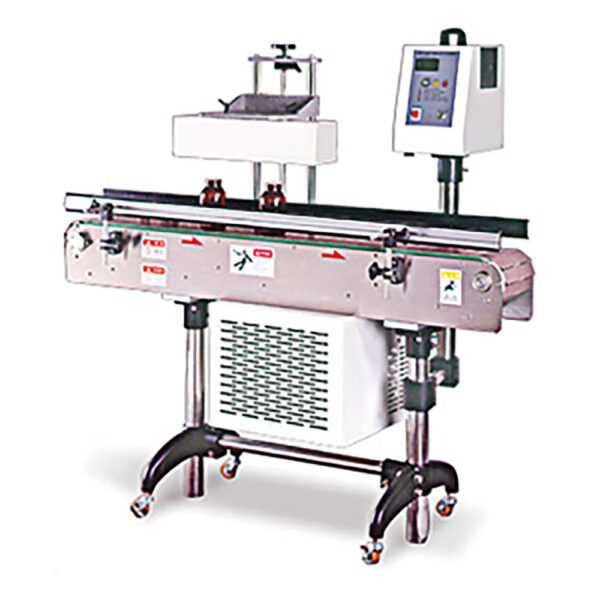
Non-Contact Electromagnetic Thermal Bonding
Liquid chemicals, motor oils, pharmaceuticals, and perishable beverages face constant risks of leakage, evaporation, and contamination during transport. Sourced cap sealing machine configurations utilize high-frequency electromagnetic induction fields to bond foil liners to container necks without physical contact. As capped bottles pass beneath the induction sealing coil, the conductive aluminum layer heats instantly, melting the thermoplastic polymer coating to create an airtight, hermetic weld across the bottle mouth in fractions of a second.
Tamper-Evident Security and Shelf-Life Extension
Loose caps and unsealed containers expose contents to atmospheric moisture, oxygen, and unauthorized tampering. As an end-to-end solutions provider, Syspex resolves these quality control vulnerabilities by sourcing continuous inline and semi-automatic induction sealers. The resulting seal creates an unmistakable, tamper-evident barrier that locks in aromas, prevents powder or liquid leakage under severe transit vibration, and significantly extends retail shelf life across standard plastic (PE, PP, PET, PVC) and treated glass containers.
The SYSPEX Advantage in End-to-End Integration
- 30 Over Years of Industrial Experience With over three decades of work, we act as your trusted solutions provider. We deliver complete container closure audits, liner material selection, and line integration consultation.
- Consultative Engineering We work closely with your team to review your specific neck diameters, line speeds, and cap profile clearances, ensuring your sourced induction sealing hardware integrates seamlessly.
- Regional In-House Technical Expertise Our own technical engineer team is located in Singapore, Malaysia, and Indonesia. This means we can provide fast line mounting, power-frequency calibration, and ongoing preventative maintenance support.
- Sustainability Commitment We supply energy-efficient, air-cooled and water-cooled induction systems with dynamic power regulation, minimizing standby electrical draw and eliminating product waste caused by faulty seals.
Frequently Asked Questions
An induction cap sealing machine uses an electromagnetic coil to generate an eddy current inside the aluminum layer of a multi-layer foil liner already inserted inside a threaded cap. The aluminum heats up instantly, melting the heat-seal polymer film on the liner and fusing it securely to the lip of the bottle mouth without heating the cap or the product itself.
Induction sealing is compatible with nearly all standard rigid plastic packaging materials, including HDPE, LDPE, PP, PET, and PVC, as well as specially treated glass bottles. The heat-seal layer on the foil liner must match the polymer resin of the container for a secure molecular bond.
Yes. Sourced inline continuous induction sealers feature high-output power generators and optimized coil heads (such as flat coils for standard caps or tunnel coils for dispensing/flip-top caps) capable of sealing containers at speeds exceeding 100 to 200 bottles per minute without slowing production.
Air-cooled units use internal cooling fans, making them compact, portable, and ideal for low-to-medium speed packaging lines. Water-cooled systems circulate chilled fluid through the induction coil, providing continuous thermal dissipation required for high-volume, 24/7 manufacturing operations and wide-mouth containers.
No. Induction sealing requires non-metallic plastic caps. If a metal cap is passed under the electromagnetic coil, the cap itself will heat up rapidly, creating a severe burn hazard and damaging the closure threads rather than transferring energy specifically to the inner seal liner.
The return on investment is achieved by completely eliminating costly transit leaks, preventing product return claims, stopping counterfeit tampering, and extending shelf life. Automating your container sealing process safeguards product integrity while optimizing packaging throughput.